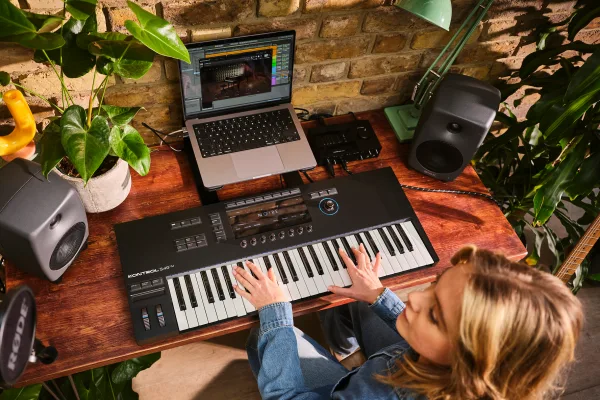
A recording bundle has one job, as far as I’m concerned. If somebody gets home with the box on Saturday afternoon, they ought to be able to record something before dinner. If they’re back at the store at 4:45 looking for a cable, somebody bundled the wrong stuff.
I say that as a guitar player who’d rather get a take with the band in the room than spend the night moving a snare hit three pixels to the left. But I’m glad a kid with a laptop and a song can get something down without having to book a room or find a drummer (a process that can take considerably longer than learning to use an interface).
There’s a particular kind of misery in hearing yourself perfectly well through the headphones and discovering, when you play the take back, that you’ve recorded nothing. Or you’ve recorded the laptop fan because the software was listening to the built-in mic. I’d put a card in the box that gets somebody from plugging in to playing back a ten-second take. They can watch the 38-minute tutorial after they’ve heard themselves make a noise.
The recording packages in this month’s cover story raise a pretty basic question for dealers: What’s the customer trying to record? Two inputs make sense for somebody singing and playing guitar at the same time. The person who wants to mic a whole drum kit is going to have a different Saturday. That’s the sort of thing a good salesperson can find out in about 30 seconds, and it’s worth more than another plug-in the customer may never install.
I’m also curious how much room there is for a store to put together its own packages. Say a customer already has a perfectly good pair of headphones and wants to record vocals in an apartment. I’d rather put that part of the budget toward a mic stand that won’t slowly sink during the second verse. Then there’s the customer who’s already made some demos and wants to bring in a second singer. For that person, an extra headphone output might be the most exciting thing in the whole box.
This is also one of those purchases where the person paying and the person using the gear aren’t always the same. A parent shopping for a holiday gift may know their kid wants to record and have no idea whether that means an acoustic guitar or a beat made entirely on a computer. Asking what the kid already has is a decent place to start.
The midterms are behind us, though I doubt we’ll be spared much discussion of what they “really” meant. I’m more interested in what happens when the people who won get around to making decisions. If you sell or rent school instruments, a district’s budget can matter a whole lot more on a Tuesday morning than whatever the cable news panel spent Monday night arguing about.
A school music director trying to keep a beginner band going has some pretty unglamorous questions to settle. Can we afford to repair the instruments we have? Can we get another section of beginners in the schedule? The dealer who’s been servicing those horns can probably tell you which repairs can wait and which ones are going to leave a kid sharing an instrument. That’s a conversation I’d like to hear more of once the yard signs come down.
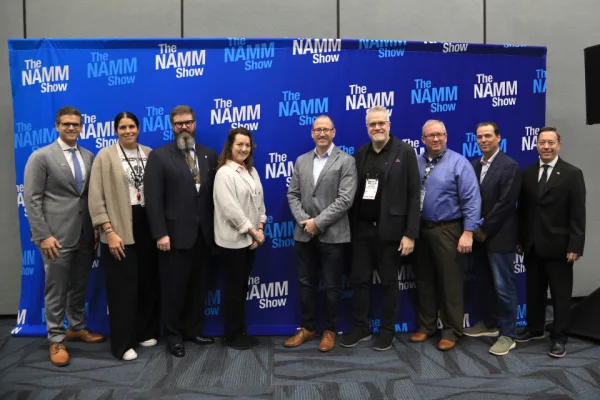
Meanwhile, January is coming up fast. The 2027 NAMM Show runs Jan. 26–30 in Anaheim, with exhibits open Jan. 28–30. I want to see what recording gear gets people to stop in the aisles this year. Better yet, I want to hear which of those things dealers think they can demo back home on an ordinary Saturday, without the person who designed it standing there to explain it.
One thing I’d ask at a booth selling an all-in-one recording package is whether the rep will let me start the demo myself. Hand me the cable. Let me find the right input. If I get stuck, there’s your first question for the sales training back home. I’d also like to hear from the people filming those demos. A good thirty-second clip can show a customer exactly where the headphones go. A clip of somebody unboxing the interface and telling me how good it sounds leaves me with more or less the same questions I had when it was still in the box.
Speaking of voting (you knew I’d get there eventually), the 2026 MMR Dealers’ Choice Awards ballot is open. If you’re a current MMR subscriber, think about what you kept reordering this year or what you found yourself reaching for when a customer asked, “What would you buy?” You can vote in whichever categories you like, one ballot per person, through 5 p.m. Eastern on Dec. 15. Cast your Dealers’ Choice Awards ballot.