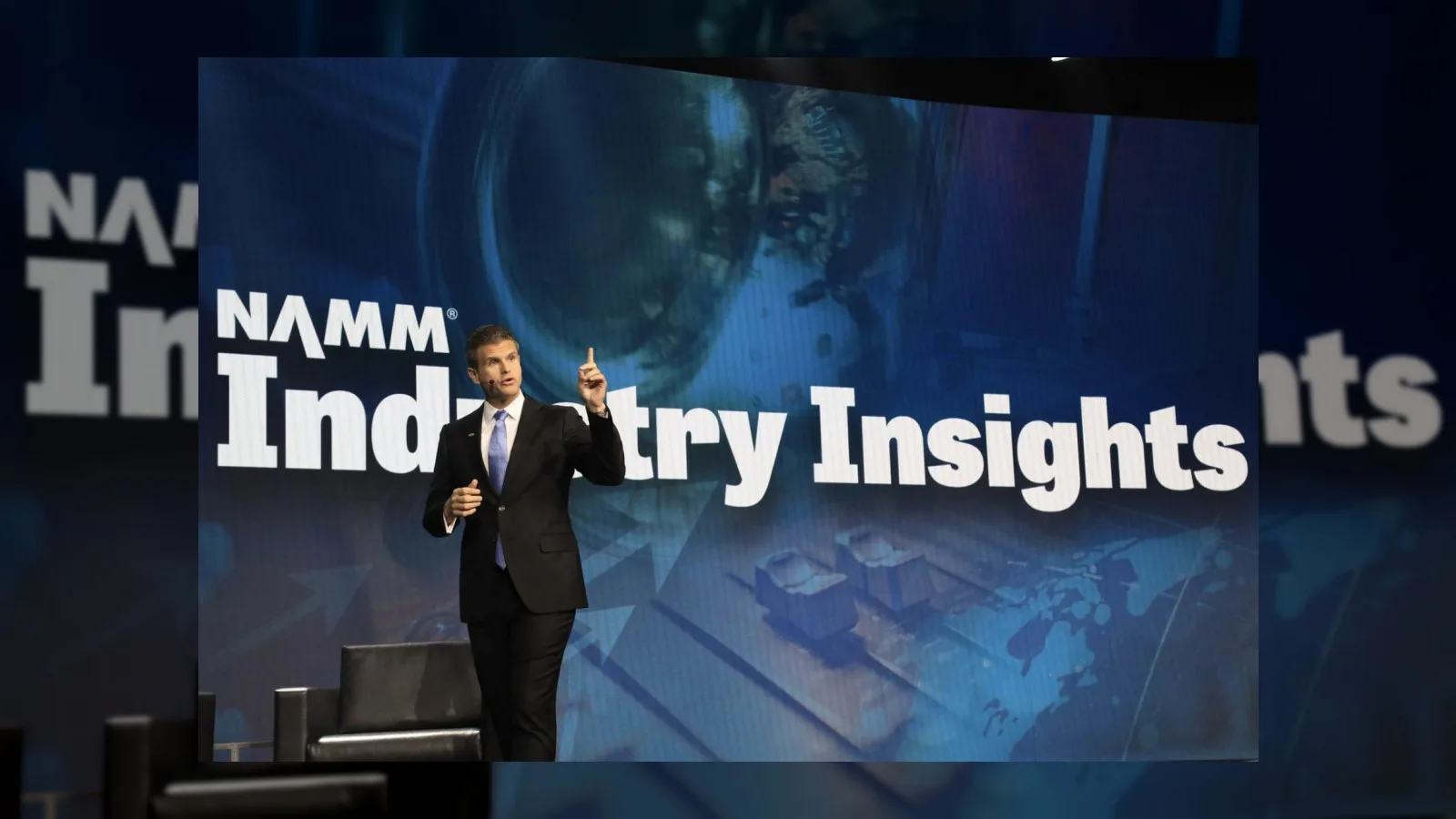
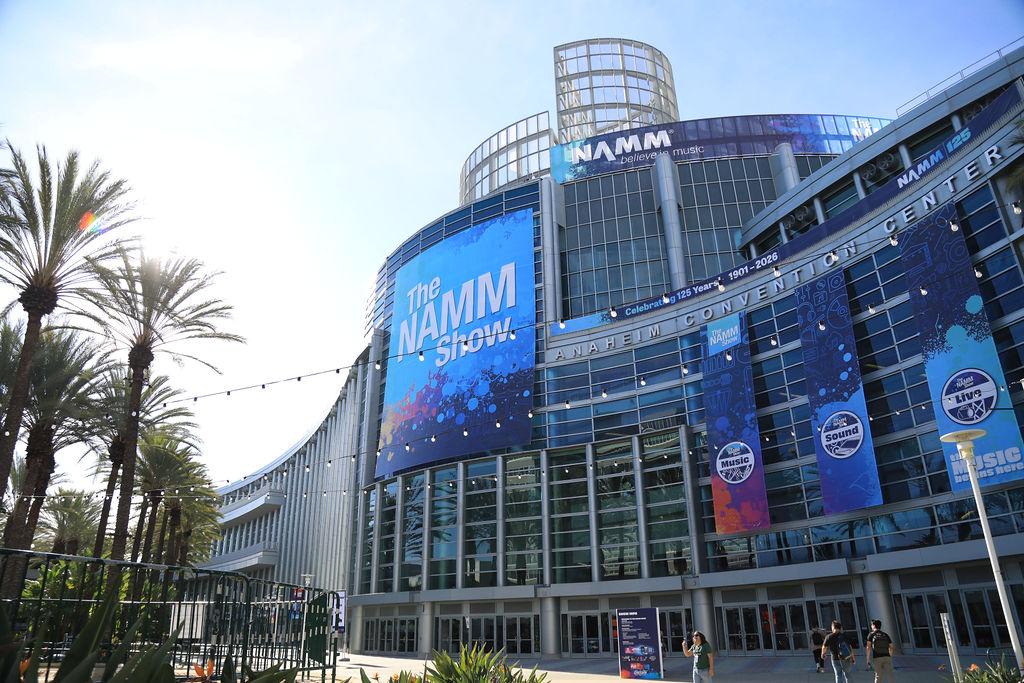
As the music products industry looks ahead to 2027, the NAMM Show is once again preparing to bring together the people, products, ideas, and technologies shaping what comes next. But the show itself continues to evolve alongside the industry it serves. In the first installment of a three-part conversation, MMR sits down with NAMM President and CEO John Mlynczak to discuss the 2027 gathering in Anaheim, how NAMM is responding to a changing marketplace, and what attendees can expect when the global music community comes together once again.
The experience is everything at the 2027 NAMM Show. It's what we build the entire event around, and it comes from convergence — the products and brands, the influencers and artists who bring them to life, and the live stage and event programming across ACC North and the surrounding campus. When product, performance, and people come together in one place, that's what creates the experience attendees remember.
This year, my advice to every attendee is simple: download the NAMM app now. You can search sessions and events happening in booths across the entire campus and start building your plan today. NAMM Connect even offers AI-powered recommendations based on your interests, so you can make the most of every minute on-site.
The NAMM Show has evolved considerably over the years, from its roots as a traditional trade show to a much broader global gathering. How do you define what the Show is today — and what do you see it becoming?
At its heart, the NAMM Show is still what it has always been: the music industry's single largest driver of annual growth, and our industry's one moment each year to come together and create energy and excitement around the products and brands that drive us forward.
What's evolving is who shows up to help amplify those products. We've always had retailers and distributors from around the world learning about and buying product. Now we also have music educators shaping how the next generation learns, influencers promoting products to global audiences, and artists performing and recording with them in front of millions. That combination — retailers, distributors, educators, influencers, and artists — is where the future of the NAMM Show is headed. We're building a show that serves every audience that helps amplify our industry's products.
Face-to-face connection has always been central to the NAMM Show, even as the ways our industry communicates and conducts business continue to change. What makes bringing the global music community together in one place especially valuable today?
Face-to-face connection is essential to why people come to the NAMM Show. As an industry, we work together year-round — Zoom calls, phone calls, online buying portals, product launches built around social media and video. What we don't get anywhere else is the chance to be together, in person, all at once. That's what the NAMM Show creates.
Being together in one place generates an energy around growth, networking, and opportunity that you simply can't replicate remotely. Anyone who's attended the NAMM Show will tell you: you leave with more opportunities than you knew existed when you walked in.
NAMM now serves a remarkably broad community — manufacturers, retailers, distributors, artists, educators, creators, technology companies and other music professionals. How do you create an event that delivers meaningful value to all of those constituencies while maintaining a cohesive identity?
Some would say you can't be all things to all people, and it's something we think about constantly. But the NAMM Show isn't one thing — it's a campus that brings together dozens of smaller communities, each with its own needs and its own networking. So when people think of NAMM, it's not a single audience. It's manufacturers, retailers, distributors, artists, educators, creators, and technology companies, plus all the intersections those audiences need with brands and with each other.
We look at the NAMM Show as a collection of many communities intersecting in one place. With more than 65,000 attendees, we know the average company or attendee isn't there to see all 65,000 people — they're there to see the 500 or 1,000 who will genuinely move the needle for their year. Our job — through technology, programming, and how we organize the campus — is to make sure every brand finds the specific audience that matters most to them.
The boundaries between traditional musical instruments, pro audio, music technology, content creation and other segments continue to blur. How is that evolution influencing the way you think about the 2027 Show and the companies and professionals it serves?
When I think about blur, I think about consolidation — companies innovating, growing, and consolidating rapidly, whether by opening new channels themselves or through mergers and acquisitions. Instruments, audio, and technology are all intersecting, and that intersection is part of the magic of the NAMM Show.
The real question is how we harness it to create the right experience. Some brands build out experiences across multiple floors. Others exhibit in several areas, so an audience might find fretted instruments in one part of the campus and pro audio and recording in another. What matters most to us isn't how a company sees its own consolidation — it's how the audience finds what they're looking for.
That's why we've built new categories into the app, aligned our education tracks with our product categories, and expanded NAMM Connect to help people navigate quickly. A company may be blurred across multiple categories, but for an attendee looking for the right recording gear or the right guitar, our focus is on that experience — helping them find what they need, because that's ultimately what brings brands to the NAMM Show in the first place: capturing that audience.
International participation has long been an important part of the NAMM Show. What are you seeing from the global music products community heading into 2027, and where do you see opportunities to strengthen those international connections?
As the only global music products trade show, we take international attendance seriously, and we continue to see strong international presence even amid global tensions and challenges. That international community is vital to the Show's success.
To help cultivate it, we hosted NAMM NeXT Europe in Amsterdam this past June, bringing together more than 80 industry leaders from across Europe to talk about the future of our industry and how we can cooperate more effectively. We're following that with NAMM NeXT Latin America in November.
So beyond the international receptions and activities we host at the Show itself, we're going out between NAMM Shows to gather the industry on other continents, learn their needs firsthand, and talk about the value of global cooperation. NAMM has become the global leader in bringing our industry together.
For someone in the industry who hasn't attended the NAMM Show recently — or perhaps has never attended — what would you tell them about why 2027 is a particularly important year to be there?
I'll answer this in two parts. For someone who has never attended, the NAMM Show is the culmination of your career, your brand, and your future. You'll find the people, the products, the energy, and the education you need to move forward. It's the room where it happens — and you'll see that even more in 2028 and beyond as we continue to grow.
For someone who hasn't attended recently, my advice is to come back in 2027 with a fresh perspective. Don't think of NAMM as just a retail buying channel or a trade-only event — that's the past. Think of it as a global branding experience. The value our audience creates on-site, combined with the audience watching from around the world, generates more brand demand in five days than the rest of the year combined. That's why 2027 is the year to see NAMM with fresh eyes.