
A guitar comparison becomes more useful when the next person can understand what was checked. For dealers and school buyers, a consistent record also separates the instrument's observed condition from assumptions about what a familiar brand or price should deliver.
Begin by writing the intended use. A classroom instrument shared by beginners, a student's personal guitar, and a specialist performance instrument can require different compromises. Compare each candidate with that job in mind.
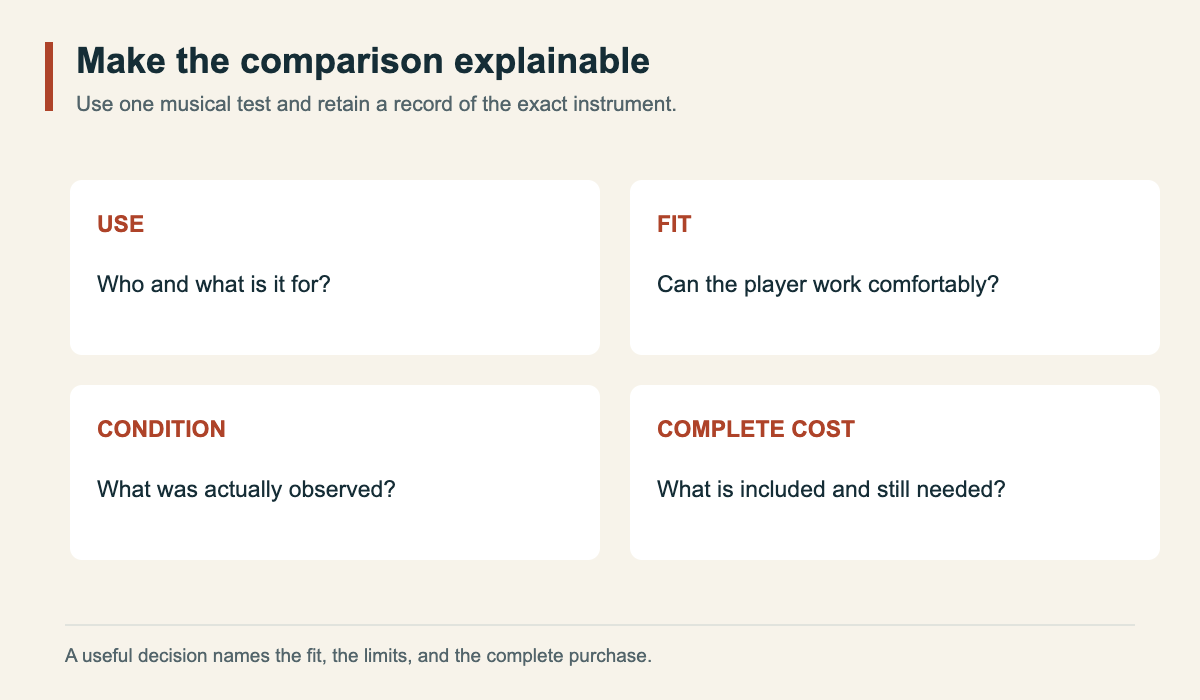
Identify the actual example
Record maker, model, handedness, and the identifying information the store normally retains. Include whether the example is new, used, modified, or a demonstration instrument. If a different unit will be supplied, state that clearly.
Note tuning and the fitted strings if known. An unidentified set or a different setup can affect how an instrument feels during comparison. Unknown information should stay visible until it is resolved.
Let the player find a working position
Try the instrument seated and, if relevant, standing with appropriate support. Check reach to common playing positions and access to the instrument's controls. Let the intended learner or player describe comfort in their own words.
For a classroom order, consider how the instrument will be supported, carried, stored, and identified. Fit is not determined by a fraction-size label alone. The individual model's dimensions and the player’s actual reach matter.
Inspect, then demonstrate
Look for visible condition issues and document them without announcing a cause you have not established. Structural concerns or uncertain repairs belong with qualified service staff.
Play open strings and a sequence of notes across the fingerboard at an appropriate attack. Include the positions the customer expects to use. Listen for unwanted sounds, notes that fail to speak, and tuning behavior. A quick inspection should not be represented as a complete technical certification.
When checking pitch along the neck, distinguish a general playing comparison from a technician's intonation and setup procedure. If the result raises a concern, refer it and record the outcome before describing it as resolved.
Use the same musical test
Choose a short chord progression, a single-note passage, and a dynamic contrast that the player can repeat. Keep the listening conditions reasonably consistent. For amplified guitars, record the signal path and starting controls.
A louder demonstration can seem more impressive without serving the buyer's task better. Compare at similar listening levels where practical, then ask what the player actually noticed: clarity, comfort, balance, response, or another specific feature.
Add the items that make it usable
A complete price may include a case or bag, strap, suitable support, tuner, required cable or amplification, setup, and the first maintenance needs. Some items will already be available; do not bundle replacements simply to lengthen the quote.
For schools, check purchase documentation, inventory labeling, storage capacity, service arrangements, and the maker's current warranty terms. Keep the supplier's written quote and the store's current return policy with the comparison.
Write a decision, not a score out of ten
Finish with three short statements: why the instrument suits the use, which limits or concerns remain, and what the purchase includes. If a feature was not tested, say so.
That record can support a recommendation to a parent, department head, purchasing office, or another staff member. It also gives the customer a clear account of the particular instrument they are taking home.