Spectera eliminates RF anxiety on the road with Foo Fighters Industry veteran Monitor Engineer Ian Beveridge deploys Spectera to map stadium spaces with sonic clarity, preserving uncompromised stereo fields via Spectera’s bidirectional architecture Vancouver, British Columbia, October 27, 2026 – Managing the live monitor world for the Foo Fighters requires a mix that can cut through a beautiful sonic wall of absolute chaos. With three full-throated, distorted guitars and a high-energy drum attack, creating intelligible space inside in-ear monitors (IEMs) is one of the most grueling assignments in professional live audio.
Sennheiser Logo
Spectera eliminates RF anxiety on the road with Foo Fighters Industry veteran Monitor Engineer Ian Beveridge deploys Spectera to map stadium spaces with sonic clarity, preserving uncompromised stereo fields via Spectera’s bidirectional architecture
Vancouver, British Columbia, October 27, 2026 – Managing the live monitor world for the Foo Fighters requires a mix that can cut through a beautiful sonic wall of absolute chaos. With three full-throated, distorted guitars and a high-energy drum attack, creating intelligible space inside in-ear monitors (IEMs) is one of the most grueling assignments in professional live audio.
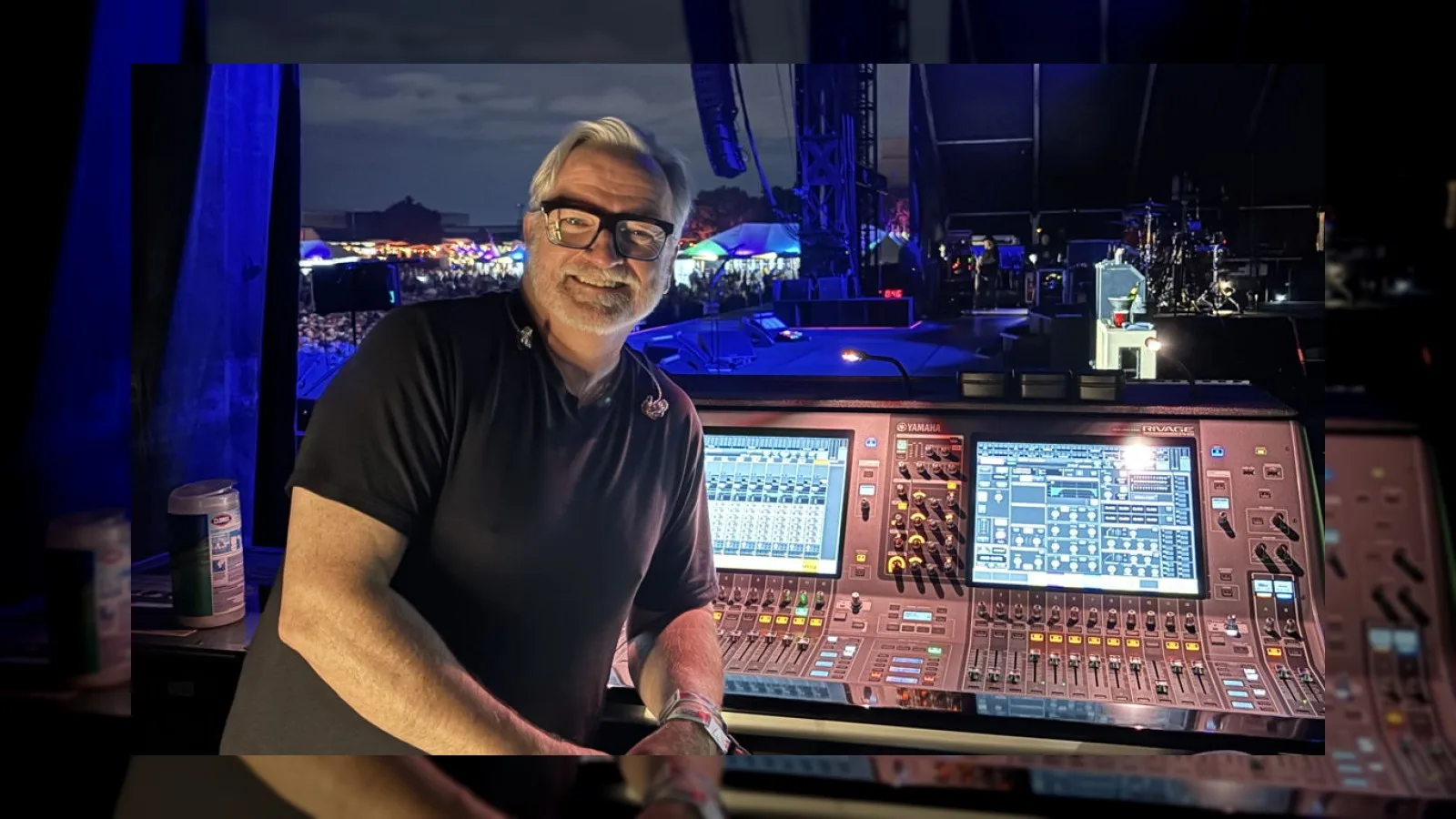
For 37 years, monitor engineer Ian Beveridge has been the steady hand at the console for Dave Grohl, with Beveridge going on tour with Nirvana to support their debut album in Europe. To eliminate baseline RF anxiety for an upcoming summer stadium tour, Beveridge and the technical crew deployed Sennheiser’s Spectera wideband bidirectional wireless system, transforming their workflow and unlocking unprecedented spatial clarity.
“Traveling all over the world, swapping out narrowband systems for different geographical areas — it becomes a royal pain in the neck,” Beveridge says. “When Spectera became available, I pulled the trigger without even hearing it. I’d seen enough evidence to suggest it was going to be great, and it proved to be more than great. It’s been utterly rock solid.”
Beveridge’s journey to the mixing board is a classic tale of true rock-and-roll grit. Much to his father’s dismay, he left a predictable future on a civil engineering path at university and answered a local newspaper ad for an unpaid studio position in the basement of a video store. That leap led to live sound when a booking agent asked him to handle an incoming American band’s European van tour, where the rest was history.
“He sent me Bleach, the first Nirvana record, on vinyl,” Beveridge recalls. “It blew the foam off my cappuccino. I flew to London, met the band, and hit the road. When Nirvana ended, Dave called me up and said, ‘Hey, I’m going to start a band, you want to come work for me?’ I started with Dave when I was 26 years old, and this year I’ll be 63. I think I’ve done a decent spell.”
While Beveridge has embraced the digital revolution of Spectera for monitor distribution, his vocal chain choice remains defiantly old-school, anchored by the Sennheiser MD 431 dynamic microphone to protect more than just the band’s sonic signature.
“One of our previous front-of-house engineers wanted to switch to a heavier, boutique brass mic,” Beveridge recalls. “I told him, ‘Sure, we can change it. But when the boss is running across that stage doing 20 miles an hour, slams into a heavy brass mic, and takes out his front teeth, are you going to be the one to explain that to him?’ He said, ‘Let’s just leave the 431 up there.’ As long as I’m the monitor engineer, that will always be the microphone for this band.”
While the vocal microphones address the requirements at the front end, the monitor mix presents another challenge: maintaining a precise and stable stereo image across the band’s dense arrangements. Conventional analogue FM stereo IEM systems rely on multiplexing to encode the left and right channels, and stereo separation can deteriorate as RF conditions become less favorable.
For more information, visit en-us.sennheiser.com.