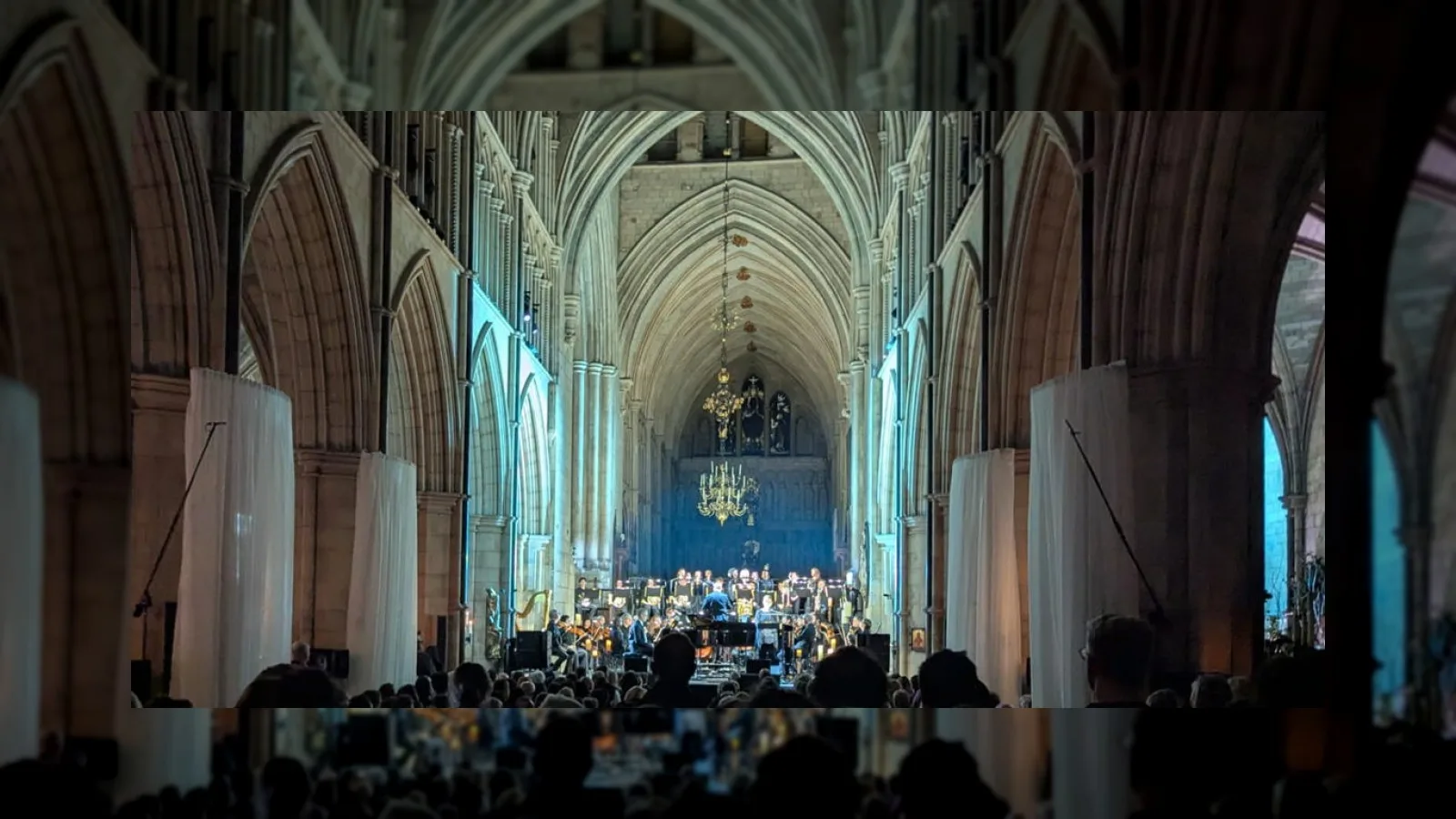
Count live mix across London over the public internet with no truck on site London, UK, 14th October, 2026 – Award-winning production company Spiritland Productions deployed a Solid State Logic System TTCA Flypack on a landmark project to record a live performance given by Max Richter of his Hamnet soundtrack at Southwark Cathedral and cut it to vinyl at Abbey Road Studios six miles away in real time. The challenge was the lack of nearby parking and power provision for an OB truck at the cathedral, necessitating an innovative approach that combined local mixing with remote control.
Spiritland and Solid State Logic Bring Full-Scale Remote Live Mixing to Southwark Cathedral for Max Richter’s Hamnet Live-to-Vinyl Event SSL System T Flypack enables Spiritland to deliver a low latency, high-channel-count live mix across London over the public internet with no truck on site
London, UK, 14th October, 2026 – Award-winning production company Spiritland Productions deployed a Solid State Logic System TTCA Flypack on a landmark project to record a live performance given by Max Richter of his Hamnet soundtrack at Southwark Cathedral and cut it to vinyl at Abbey Road Studios six miles away in real time. The challenge was the lack of nearby parking and power provision for an OB truck at the cathedral, necessitating an innovative approach that combined local mixing with remote control.
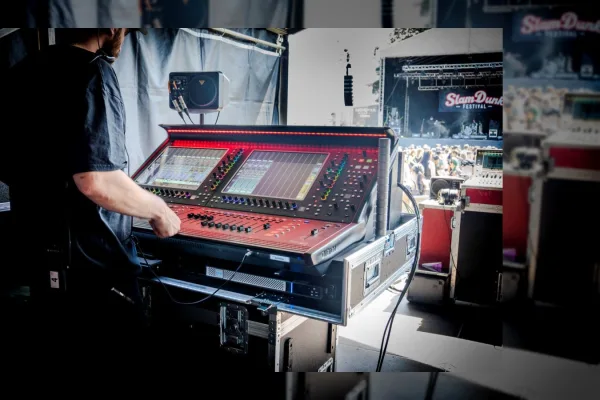
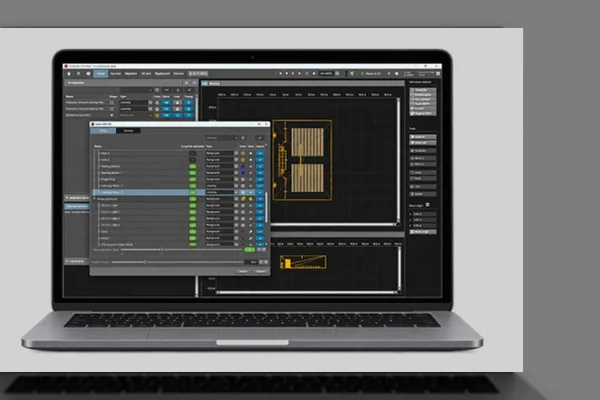
Rather than moving audio off-site, Spiritland deployed the processing on-site and moved only the control data. Two redundant SSL T25 Tempest Engines were deployed at Southwark Cathedral, handling the full mix locally at ultra-low latency, while a PC running TCA software provided comprehensive control of the Flypack system. Six miles away at Abbey Road Studios, engineer Rupert Coulson operated the mix remotely from an SSL S500 control surface, with every adjustment transmitted across the public internet while the audio processing remained at the cathedral.
As far as Rupert was concerned, he was using the SSL surface in the truck as if we were parked outside, says Spiritland director Antony Shaw. There was no obvious latency. There was probably between 30 and 40 milliseconds of delay between moving a fader and hearing a difference on the return feed, which for that kind of slow-moving, swelling music was neither here nor there.
The Flypack handled a line list that ran to around 120 inputs at 96 kHz. Total control data bandwidth across the link was approximately 40 Mbps, consisting of the control stream plus a small number of audio feeds. Usefully, choosing on-site mixing means that the data rate is a constant; it is much lower than it would be if all audio channels were being moved across the link and does not increase with the number of inputs being mixed.
The network infrastructure meant that neither end of the pipeline required a public IP address, and all traffic was routed through a single cloud endpoint. Redundancy was provided by the cathedral’s house internet connection, two bonded Starlink terminals deployed outside, and two 4G boosters, making a total of five IP connections. Priority was given to the stereo master feed being cut to vinyl rather than console control, on the basis that the SSL engines would continue processing in their last known state if control was temporarily lost.
Other data carried over the link included four two-way communication channels, video for PTZ cameras at both locations to provide each team with visibility of what was going on at either site, and a GPIO trigger from the Abbey Road comms panel that drove a QLab display in the cathedral showing Vinyl Cutting or Standing By messages.
From the truck, a Dante connected stagebox fed the stereo master into Abbey Road’s cutting chain. Multitrack machines at Abbey Road were also under remote control from the truck, allowing virtual sound check to proceed as normal.
For more information, visit solidstatelogic.com.